A bad night got worse
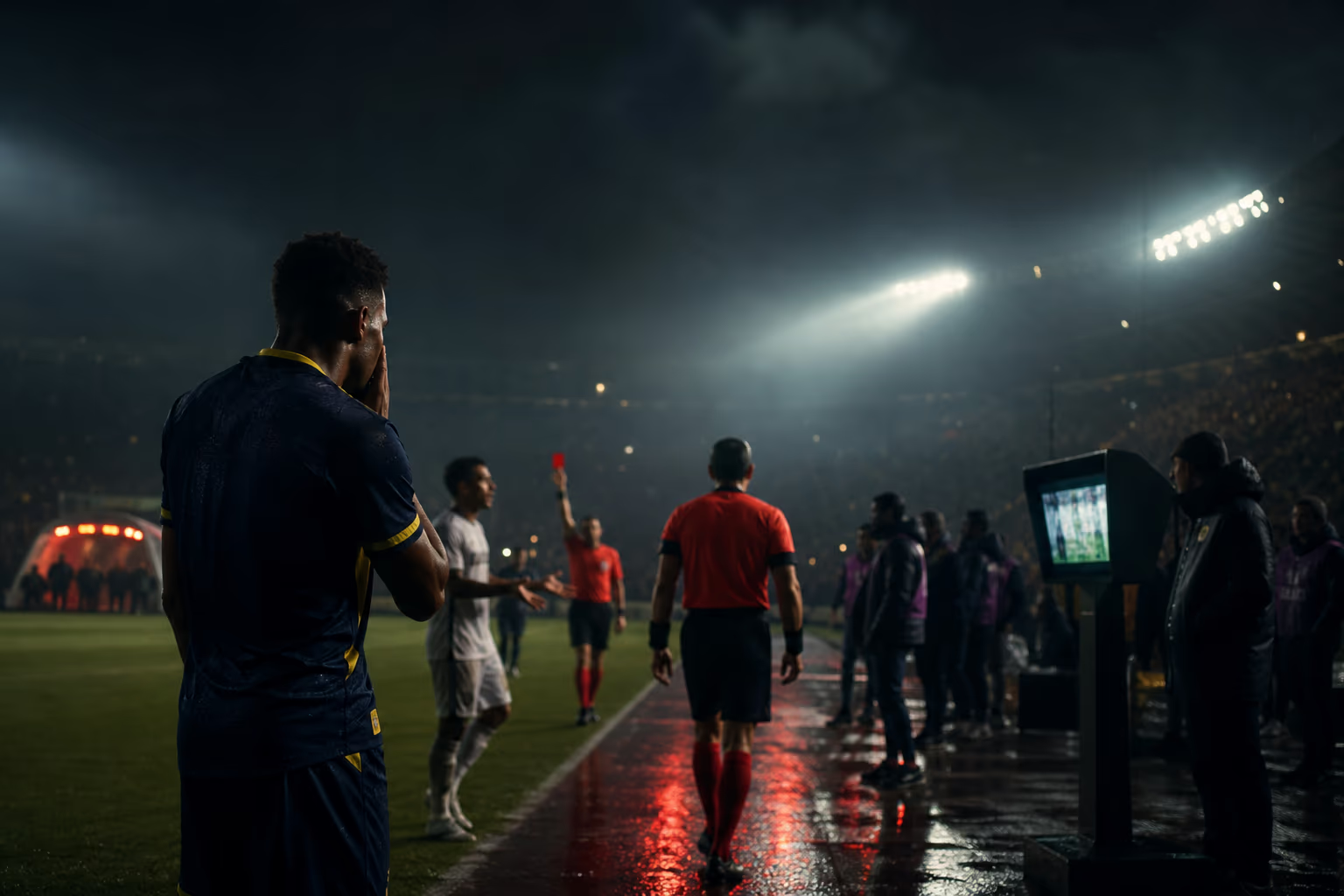
Deep into stoppage time, with Ecuador facing elimination, Piero Hincapie confronted Mexico's Santiago Gimenez. It seemed the usual end-of-match niggle, until Hincapié raised his hand to shield his lips before speaking. Giménez turned straight to referee Slavko Vinčić and pointed. Vinčić walked to the pitchside monitor, took his look, and reached for red. Ecuador finished with ten, and their defender did not wait around. He walked past coach Sebastián Beccacece and ignored the hand the manager had stuck out.
Why the referee had no choice
Hincapie fell foul of a new law introduced for the 2026 tournament. Under it, a player who covers their mouth with a hand, arm or shirt during a confrontation is liable to be sent off.
The rule does not cover friendly exchanges on the pitch. Players can still cover their mouths when talking to opponents without animosity, such as chatting with club teammates lining up on opposing sides. But if a player does it in the middle of a row, they're off.
The International Football Association Board approved an amendment to address discriminatory and inappropriate conduct, with backing from FIFA President Gianni Infantino.
The Prestianni case behind the law
The measure followed an incident involving Benfica's Gianluca Prestianni and Real Madrid's Vinicius Junior during a Champions League match. After a heated argument, Prestianni covered his mouth with his shirt before speaking to the Brazilian.
Vinicius ran to the official and alleged racial abuse. A racism protocol was triggered and an investigation followed. Prestianni was handed a six-game suspension by UEFA after he admitted using a homophobic insult, though he said he had not meant it that way.
FIFA moved to remove the ambiguity that a covered mouth creates.
A pattern at the 2026 World Cup
Hincapie, the Arsenal defender, is the second player dismissed under the law at this tournament. Paraguay's Miguel Almiron was the first, sent off during his side's Group D win over Turkiye.
Both players punished so far are South Americans. Add Prestianni, and all three names attached to the rule come from CONMEBOL nations: Argentina, Paraguay and Ecuador.